
In this tenth edition of Spaghetti Sunday, the career of Anthony Steffen will be under the microscope, with various of his spaghetti western based flicks being reviewed. It’s important to note that this post will continue to grow over time, with new Anthony Steffen reviews added as more of his spaghetti western flicks are watched. As with every article and review on the website, this entire series will be spoiler-free.
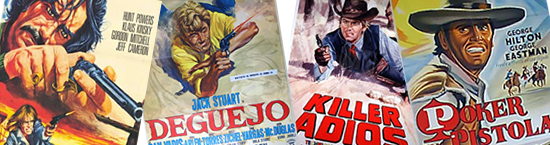
– The Anthony Steffen Edition –
Antonio Luiz de Teffe von Hoonholtz, better known to audiences around the world as Anthony Steffen, was born July 21, 1930, at the Brazilian embassy in Rome, Italy. Steffen began working at a young age behind the scenes in several Italian productions, before eventually playing small roles but never achieving stardom.
From 1965 to 1975, however, the newly named Anthony Steffen began achieving considerable fame, amassing cult status along the way, starring in a plethora of spaghetti westerns. Many people, at the time, considered him to be the “Italian Clint Eastwood”, due to his stiff or wooden approach to acting. Outside of the spaghetti western genre, Steffen did also appear in several Italian based pictures, but overall, his roles quickly began to diminish, especially when the spaghetti western genre fell into decline.
Sadly, Anthony Steffen died in Rio de Janeiro, Brazil on June 4, 2004, at the age of 73.
Lone and Angry Man – 1965
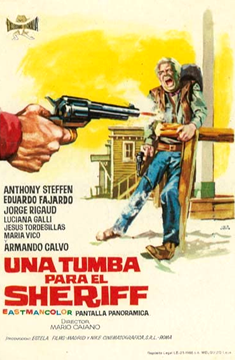
Directed by Mario Caiano, Lone and Angry Man, otherwise known as A Coffin for the Sheriff, sees Anthony Steffen star as Shenandoah, a man of mystery who joins a vicious band of highwaymen after passing a near impossible and death defying gang initiation, but it quickly becomes clear that that he has a motive for joining the gang – retribution. This fast moving western includes many of the clichés you’d expect from the genre, including fistfights, gunfights, poker, saloon girls and of course, whiskey drinking.
With a modest runtime of eighty-seven minutes, the flick boasted a rather simple and straight forward story that moved at a good pace and featured several strong acting performances from the likes of Steffen himself, along with a blonde-haired Eduardo Fajardo, who took on the role of Murdock. One minor drawback, however, would have to be the dubbing, which has been noted by many critics as falling below average.
It’s worth noting that 1965 was a year where Spaghetti Western’s were first coming to fruition, so this laid the foundations for many of its successors – for that reason alone, I regard it a highly enjoyable and watchable picture, with more than enough action sequences to keep the viewer interested.
Killer Kid – 1967
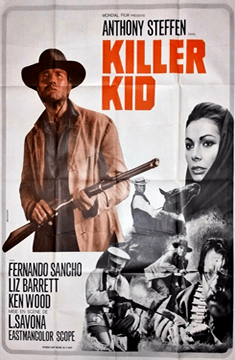
Directed by Leopoldo Savana, The Killer Kid centers around a young gunslinger named Morrison (Anthony Steffen) that gets caught up in a border rebellion and consequently ends up facing a deadly clash of loyalties along the way. A little bit of a convoluted and turbulent story that some viewers may find confusing at times, with even the rather predictable love-angle thrown into the mix too.
With that being said, Killer Kid does offer plenty of over-the-top action sequences, with many involving large explosions, as well as some entertaining gunfights. The desert-style setting also stands out as a nice change for a spaghetti western of this era, with Italy being utilised as the filming location.
Overall, Killer Kid can feel rushed and a little messy at times, but its lively action and memorable moments do give it some charm, though it’s hard to say if that fully makes up for its flaws.
A Train for Durango – 1968
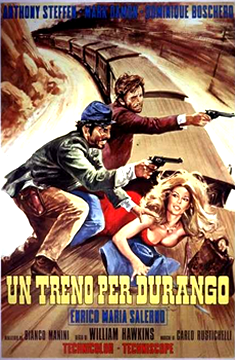
Directed by Mario Caiano, A Train for Durango centers around Gringo (Anthony Steffen) and Lucas (Enrico Maria Salerno), two friends that witness a train robbery and ultimately end up on the trail of the robbers, doing their very best to capture the gold that was stolen. A thoroughly enjoyable entry into the genre and one that includes a wealth of humour – largely subtle and dialogue driven – rather than slapstick, which is a well-known and well-used trait in the world of spaghetti westerns.
In terms of production value, A Train for Durango feels a step above many releases from the same era. Backed by an extremely strong cast that brings a host of genuinely likeable characters to life, the film also benefits from impressive camera work, striking and easy-on-the-eye landscapes, and perhaps more importantly, a consistent and effective story.
Overall, there were one or two minor flaws including the heavy reliance on humour and perhaps slightly longer than needed runtime, but A Train for Durango is a slightly different release that I’d recommend not only to fans of the genre, but fans of film in general. It’s also worth noting that Mark Damon features as the character “Brown”, the first picture in which Anthony Steffen and Mark Damon appeared together.
Dead Men Don’t Count – 1968
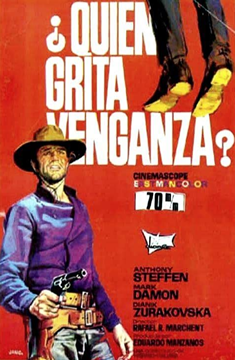
Directed by Rafael Romero Marchent, Dead Men Don’t Count sees Anthony Steffen star alongside Mark Damon, with the pair adopting the roles of bounty hunters that get caught up in a local war for land between the authorities and the people of the town. The chemistry between the two lead characters may justify watching this flick alone, as is the action presented in the later parts.
It has to be said that Dead Men Don’t Count delivers a wealth of comedy, yet the story occasionally feels a bit convoluted and untidy, particularly during the film’s early stretches. As the runtime progresses, there are also points where the pacing seems somewhat rushed, as if the filmmakers were trying to pack too much plot into its modest ninety-minute length. It’s also worth mentioning that the picture was shot in Madrid, Spain, with the majority of the locations looking convincingly authentic.
Dead Men Don’t Count was the second flick that Anthony Steffen and Mark Damon starred alongside each other, which isn’t surprising considering their chemistry. A fairly routine entry into the spaghetti western genre, maybe one that appeals to the casual viewer and purist considering the humour injected.
Sabata the Killer (1970)
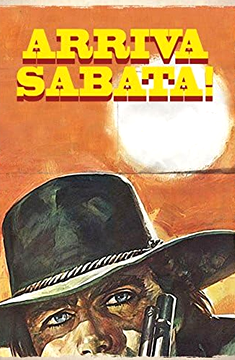
Directed by Tulio Demicheli, Sabata the Killer, also known as Viva Sabata or Dollars to Die For, boasts three very well-known men of the genre. Anthony Steffen stars as Sabata, while Peter Lee Lawrence and Eduardo Fajardo adopt the roles of Peter and Mangosta, respectively. The story follows the trio through a series of events after they steal hundreds of thousands of dollars, with a hired posse hot on their trail. An extremely fast-paced spaghetti western, boasting a standout cast, strong enough to warrant a viewing on its own merit.
An aspect of the flick worth highlighting would be the atmosphere and overall tone of the film, along with its gradual shift throughout the modest eighty-seven minute runtime. Sabata the Killer begins as a somewhat comedic, slapstick spaghetti western, complete with a fitting soundtrack, before steadily morphing into a more serious picture, culminating in an action-packed and thrilling closing act, that could rival that of any spaghetti western conclusion released in the same era.
All in all, Sabata the Killer could be regarded as a tale of two halves by some, but it’s fair to say that it features three of the genre’s most notable faces, alongside a wealth of action and comedy throughout, making it consistently engaging in the process.
It’s worth noting that the website also includes a short review of Viva! Django (1971) that was published recently, featured in the article Spaghetti Sunday – Edition #1, which stars Anthony Steffen.

